Battery Storage for Homes and Businesses
Store electricity for when you need it — with solar PV or as a standalone system.
What battery storage is
A battery storage system stores electricity so it can be used later. Paired with solar panels, it captures surplus daytime generation that would otherwise be exported. Some systems can also charge from the grid at off-peak times, depending on your tariff.
How it works
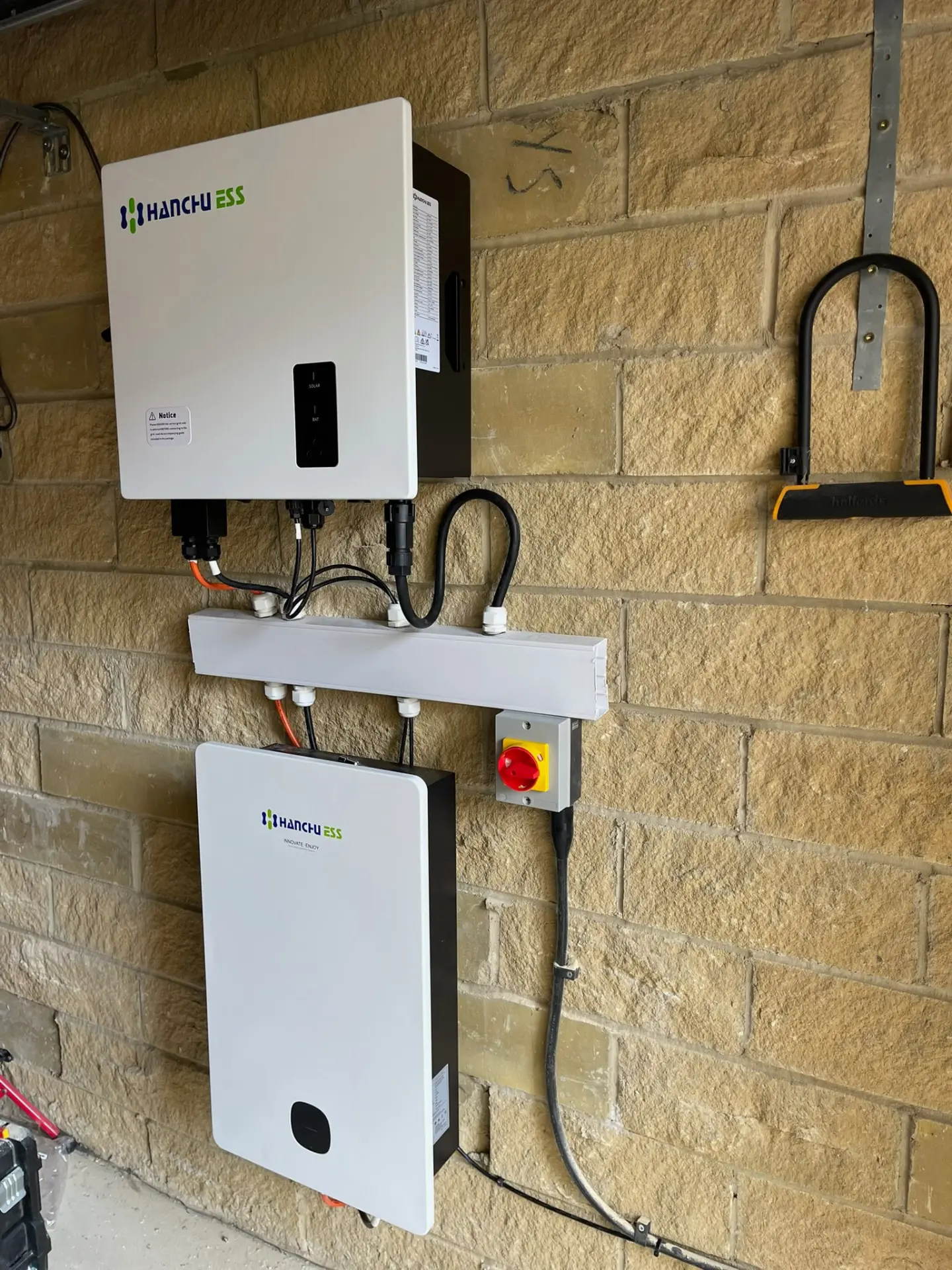
An inverter manages the flow of electricity between your panels, battery, property and the grid. When generation exceeds demand, the battery charges; when demand exceeds generation, the battery discharges to supply your property.
Benefits of Storing Electricity
Use solar after dark
Store daytime generation to use in the evening when household demand is often highest.
Time-of-use flexibility
Compatible systems can charge during cheaper off-peak periods, subject to your tariff.
Backup capability (system-dependent)
Some systems can provide backup during a power cut. This requires specific equipment and is not available on every system.
Domestic battery storage
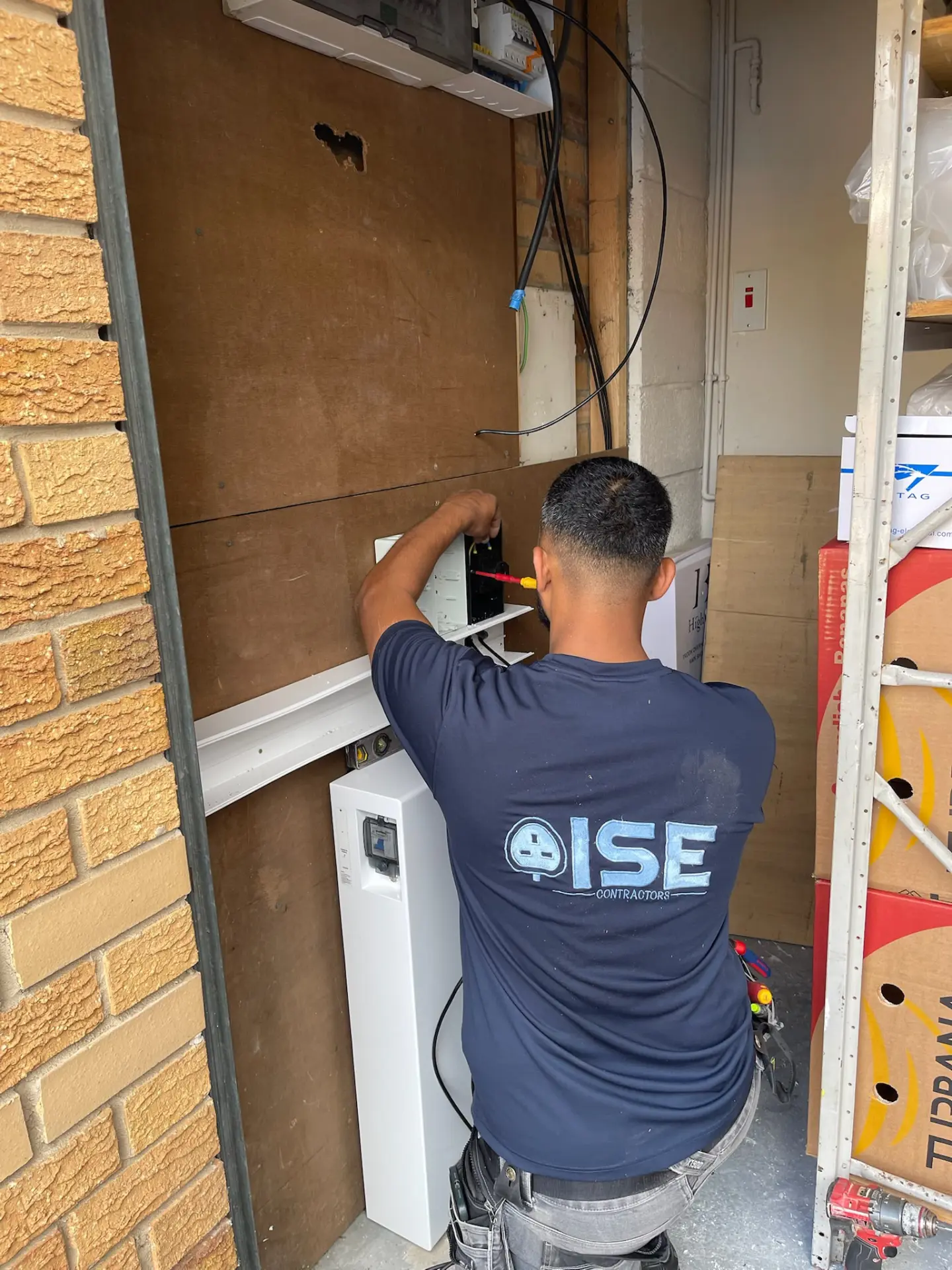
Home batteries are sized around your household's usage and any existing or planned solar system. They are usually installed in a garage, utility area or another suitable location identified during the survey.
Commercial battery storage
Commercial storage can help businesses use more of their own solar generation or manage demand. Designs consider consumption profiles, electrical infrastructure and available space.
Integration with solar PV
Batteries can be designed alongside new solar PV or added to existing systems where the equipment is compatible. A hybrid inverter may be used to manage both.
Standalone battery storage
Where solar isn't practical, a standalone battery charged from the grid on a suitable time-of-use tariff may be an option. Its value depends on your tariff and usage.
Battery sizing and suitability
The right capacity depends on how much electricity you use, when you use it, how much you generate and your goals. Larger is not always better — we recommend a size after reviewing your usage rather than promising full energy independence.
Battery Installation Process
A straightforward process designed to make switching to solar energy as simple as possible.
- 1
Initial Consultation
Discuss your requirements, property and current electricity usage to understand your energy goals.
- 2
Survey & System Design
Assess the property and develop a suitable solar PV and battery storage solution.
- 3
Quotation & Approval
Receive a clear proposal explaining the recommended installation and associated costs.
- 4
Installation
The agreed installation is carried out using appropriate equipment and professional electrical installation practices.
- 5
Testing & Commissioning
The completed system is tested and commissioned, with relevant certification and documentation where applicable.
- 6
Handover & Aftercare
We explain how your system operates, provide handover documentation and outline warranty and aftercare arrangements.
12-Year Warranties on Solar & Battery Installations
Invest in your energy future with greater confidence. Nassau Electric League offers 12-year warranties for solar and battery installations, with full coverage details provided as part of your quotation.
Solar PV
12 Years
12-year warranty. Specific terms supplied with your quotation.
Battery Storage
12 Years
12-year warranty. Specific terms supplied with your quotation.
Battery Storage FAQs
What is a solar battery?
A solar battery stores electricity — for example surplus generation from your panels during the day — so you can use it later, such as in the evening.
Can I add battery storage to existing solar panels?
In many cases, yes. Compatibility with your existing inverter and system is assessed first, and an additional or hybrid inverter may be needed.
How much battery capacity do I need?
The right capacity depends on your electricity usage, generation and goals. A recommendation is made after reviewing your usage during the consultation.
Can batteries store cheaper off-peak electricity?
Many batteries can be charged from the grid during off-peak periods if you are on a suitable time-of-use tariff. Availability depends on your battery system and energy supplier.
Can a battery provide backup power?
Some battery systems can provide backup power during a power cut, but this is system-dependent and requires specific equipment and configuration. Not all systems offer it.
Get a Free Battery Storage Quote
Whether you're considering solar panels for your home or a renewable energy solution for your business, get in touch to discuss your requirements.